Dr Donatella Banti’s Interdisciplinary Path

At the Daphne Jackson Trust, we believe in helping talented researchers become visible again after a career break — not only by supporting their return to research, but also by providing a platform for collaboration and renewed recognition. Each month, we highlight the work of one of our fellows whose journey reflects the richness of interdisciplinary research and the strength of returning talent.
This month, we’re delighted to feature Dr Donatella Banti, a Daphne Jackson Fellow funded by the Royal Society and the Royal Society of Chemistry and hosted by the Courtauld Institute of Art. Her story is one of bridging disciplines, navigating caregiving responsibilities, and finding meaningful purpose through science and cultural heritage.
An unexpected career break
Donatella began her academic career in organic chemistry, completing a PhD and postdoctoral research before working as a lecturer and later a senior lecturer. Her research focused on catalysts and synthetic chemistry, and she published a number of high-impact papers. When family caring responsibilities required her to step away from academic life, Donatella retrained in painting conservation and worked freelance in the field for several years. What was intended as a temporary break eventually extended to six years.
When she was ready to return to research, Donatella discovered the Daphne Jackson Trust — and found the part-time, flexible structure and tailored support she needed. “The Daphne Jackson Trust matched me with a fellowship advisor whose feedback and advice has been invaluable in terms of providing support, both during the write-up phase and along the course of the project.”

An Interdisciplinary Approach
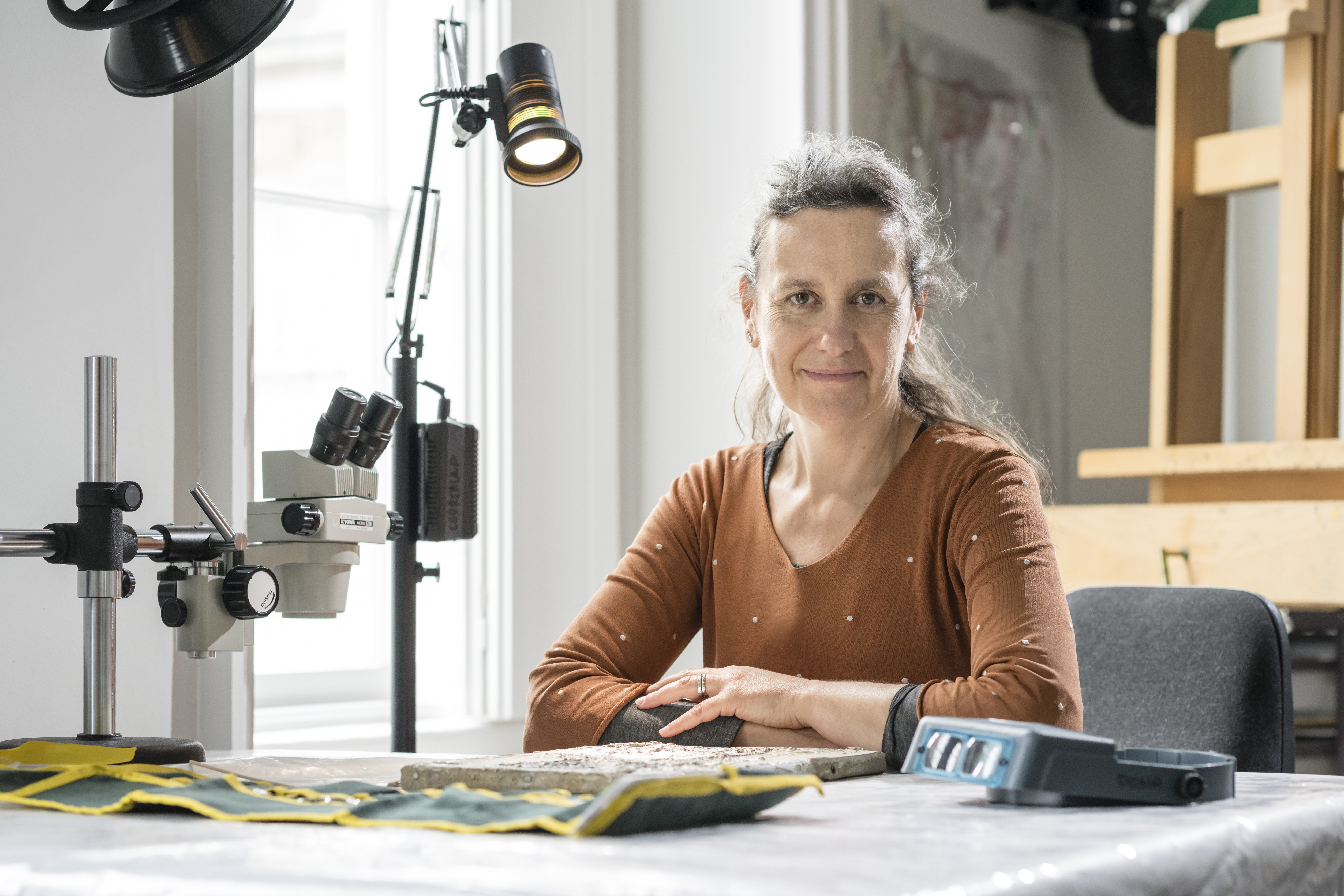
Donatella’s current project reflects her unique dual expertise in both chemistry and art conservation. Titled “Micro-FTIR and Micro-Raman data analysis for the development of a protocol for mapping organic materials and their degradation products in 20th century paint samples: A case study on Franciszka Themerson’s material and techniques,” the work aims to develop new methods for identifying and understanding degradation processes in modern artworks. By focusing on the paintings of Franciszka Themerson, a 20th-century Polish artist, Donatella not only sheds light on an under-recognised female artist but also investigates the chemical causes of cracking in modern paint layers.
I have always felt the need for my research to be meaningful and to have a social relevance. For me, being part of the professional effort to protect cultural heritage with my scientific knowledge is very rewarding, and I hope to be contributing to safeguarding the world’s cultural heritage for future generations.”
Returning to research, as Donatella acknowledges, brings both intellectual fulfilment and real challenges.
“Going back to research after a few years, you feel older than your cohort. In the meanwhile, your field has moved on, but you haven’t, so you feel left behind. Updating and upgrading your skills by attending the right workshops, seminars, conferences, and learning from generous mentorship has been the best way for me to overcome these obstacles.”
As her confidence and profile have grown, so too has her network. The visibility afforded by the Daphne Jackson Fellowship has enabled Donatella to begin several new collaborations.
I feel that my visibility has increased significantly. In fact, I have started to collaborate with a range of colleagues across fields and institutions.”
With eighteen months remaining in her fellowship, and as her caring responsibilities begin to lessen, Donatella has embraced new professional opportunities. Alongside her Daphne Jackson Fellowship, she is now working part-time as a conservation scientist at the Victoria and Albert Museum — a further testament to her commitment, adaptability, and expertise.
Donatella’s story is a powerful example of how returning researchers can bring interdisciplinary insight, renewed perspective, and deep purpose to their work. By embracing each opportunity with thoughtfulness and care, she is contributing to both science and society — and helping preserve our shared cultural heritage for future generations.